


Eco-friendly nature wood hexagon HB pencil
Soft wood raw color standard pencil
High quality 178mm pencil with customized brand
Students writing pencil,promotional pencil,gift...
HB Pencil
Yiwu Each Stationery Co., Ltd: Your Leading HB Pencil Supplier
As a professional pencil manufacturer with over 20 years of history, Yiwu Each Stationery Co., Ltd. is located in the beautiful Yiwu city, Zhejiang Province. Our company has advanced equipment and technology in this field. With continuous development of new items, we are specialized in scientific research, manufacture and sale. We have independent import & export rights. We keep developing ourselves.
Why Choose Us?
Rich experience
We have over 20 years of experience in pencil manufacturing, specializing in scientific research, manufacturing, and sales of pencils and stationery sets.
High quality
Our products are durable and use the latest manufacturing techniques and processes to manufacture products that meet or exceed industry standards.
Innovation
We have invested heavily in research and development, which has enabled us to stay at the forefront of emerging technologies and trends. This means we can provide innovative products to meet the constantly changing needs of our customers.
Reliable service
Our team is committed to providing reliable and consistent service, ensuring that you receive high-quality products and customer support from us every time.
-
![Eco-friendly Nature Wood Hexagon HB Pencil]()
-
![Cheap Round Black Wood Pencil]() Cheap Round Black Wood PencilCheap round black wood pencil with dipped endread more
Cheap Round Black Wood PencilCheap round black wood pencil with dipped endread more
Black wood color pencil with golden logo
soft wood balck wood pencils for promotional
MOQ:1000PCS -
![Round Nature Wood Pencil For Promotional]() Round Nature Wood Pencil For PromotionalEngraved log round nature wood pencil for promotionalread more
Round Nature Wood Pencil For PromotionalEngraved log round nature wood pencil for promotionalread more
Standard HB pencil with white eraser
Bulk packing cheap pencil
High quality raw color pencil for gift
MOQ:3000PCS -
![Ivory White Round Wood Pencil With Dip Top]() Ivory White Round Wood Pencil With Dip TopCustomized ivory white round wood pencil with dip topread more
Ivory White Round Wood Pencil With Dip TopCustomized ivory white round wood pencil with dip topread more
special pencil lead can write on wet paper
Sharpened tip 7 inch wooden pencil with customized logo
MOQ:10000PCS -
![Half Size Mini Golf Pencil With Eraser]() Half Size Mini Golf Pencil With EraserHalf size mini golf pencil with eraserread more
Half Size Mini Golf Pencil With EraserHalf size mini golf pencil with eraserread more
3.5 inch HB lead wood pencil with eraser top
Mini order quantity:10000PCS -
![Fancy Colorful Glitter Pencil With Logo]() Fancy Colorful Glitter Pencil With LogoFancy colorful glitter pencil with logoread more
Fancy Colorful Glitter Pencil With LogoFancy colorful glitter pencil with logoread more
7 inch glitter wood pencil with HB lead
MOQ:5000PCS -
![Mini Size Golf Pencil With Eraser]() Mini Size Golf Pencil With EraserPromotional mini size golf pencil with eraserread more
Mini Size Golf Pencil With EraserPromotional mini size golf pencil with eraserread more
Round paint color body golf pencil with customized logo
Bulk packing half size pencil with eraser
MOQ:10000PCS -
![Neon Barrel Round Pencil With Eraser]() Neon Barrel Round Pencil With EraserColorful neon barrel wood pencil with color eraserread more
Neon Barrel Round Pencil With EraserColorful neon barrel wood pencil with color eraserread more
Sharpened 7 inch round paint color pencils
Back to school stationery -
![Luxury OEM Logo Gold Foil HB Pencil]() Luxury OEM Logo Gold Foil HB PencilGolden film HB pencilsread more
Luxury OEM Logo Gold Foil HB PencilGolden film HB pencilsread more
Gold plated round HB wood pencil
Customized logo pencil manufacturing -
![Standard Black Wood HB Pencil With Red Body]() Standard Black Wood HB Pencil With Red BodyStandard black wood HB pencil with red bodyread more
Standard Black Wood HB Pencil With Red BodyStandard black wood HB pencil with red bodyread more
Sharpened tip black wood 7 inch HB pencil
Bulk packing graphite wooden pencil -
![Black Wood Pencil With Woven Label]() Black Wood Pencil With Woven LabelChina factory hot sale newest black wood pencil with flag on the topperread more
Black Wood Pencil With Woven LabelChina factory hot sale newest black wood pencil with flag on the topperread more
Customized woven label
promotional flag pencils -
![Laser Film HB Pencil with Eraser]() Laser Film HB Pencil with Eraser·Wooden design which is easy to hold; HB core and moderate hardness, suitable for writingread more
Laser Film HB Pencil with Eraser·Wooden design which is easy to hold; HB core and moderate hardness, suitable for writingread more
·Pencil size: about 17.5cm in length
·Round shape with dark grey eraser
·Sharpened...


What Is HB Pencil?
An HB pencil is a medium-hardness graphite pencil, falling in the middle of the graphite scale. It is often used for everyday writing and drawing tasks and produces a clear, dark line. The letter 'H' represents the hardness of the graphite, while the letter 'B' represents the blackness or softness of the graphite. The higher the number before the H or B, the harder or softer the pencil lead.

Advantages of HB Pencil
01/
Versatility
HB pencils are perfect for a variety of tasks, including writing, drawing, and sketching. This versatility makes them ideal for artists, writers, and students.
02/
Easy to use
HB pencils are easy to sharpen and require little pressure to use. This makes them a great choice for anyone who writes or draws for extended periods.
03/
Consistency
HB pencils produce consistent lines and are less prone to smudging than softer pencils.
04/
Durability
HB pencils are durable and can last a long time if properly taken care of. They are also more resistant to breaking when sharpened.
05/
Available everywhere
HB pencils are widely available and can be found in most stationery stores or online. They are also affordable and come in various shapes and sizes to accommodate different needs.
06/
Health benefits
Since HB pencils require less pressure to use, they are less taxing on the hand and less likely to cause hand fatigue or strain.
07/
More environmentally friendly
HB pencils are made of graphite, a naturally occurring mineral. This makes them more sustainable and environmentally friendly than pens, which require plastic and ink.
08/
Good for writing
HB pencils are ideal for writing because they produce clear, legible text, making them a great choice for note-taking or writing in a journal.
Components of an HB Pencil
Wooden barrel
This is the main body of the pencil that holds the lead in place.
Graphite lead
The HB pencil contains a medium-hard lead that is made of a mixture of graphite and clay, which determines the pencil's hardness.
Eraser
An HB pencil typically has an eraser attached to its end, allowing users to correct their mistakes easily.
Ferrule
This is a metal band that holds the eraser in place and reinforces the tip of the pencil to prevent it from breaking.
Wax or resin
A layer of wax or resin is often applied to the pencil lead, making it easier to write smoothly and uniformly on paper.
Paint or varnish
The wooden barrel of an HB pencil is usually coated in paint or varnish to give it a smooth finish and protect it from wear and tear.
How Are Drawing Pencils Numbered?
Within each category, the hardness or softness of the lead is determined by numbers on a scale. To make it easier to understand, let's start at the center of the scale. There you will find the HB pencil. You can think of it as the “Goldilocks pencil” —not too hard, not too soft, but just right. It is the closest thing to an equal mixture you'll get. Left of center is where you'll find the H category and right of center is where the B category starts. Within both categories, you have numbers that designate their density.
Let's look at the H category first. As the pencils proceed from the center, or HB, pencil to the left, they get lighter. Therefore, as the number increases, so too, does the density, making each subsequent pencil lighter and lighter. The first pencil in this category is the one right next to the HB. It is considered the number one H pencil but is designated as simply H, without a number. The next pencil is a 2H, then 3H, 4H and so on, up to 6H.
Now for the B category. This category proceeds from the center to the right, getting darker as the numbers progress. As the number increases, so too, does the softness of the lead, making each subsequent pencil darker and darker. The first pencil in this category is the one next to the HB, and is considered the number one B pencil. It is designated as simply B. The next pencil is a 2B, then 3B, 4B and so on, up to as high as 12B.
Although 12B is considered a very dark pencil, you can actually get a darker mark with charcoal pencils. Charcoal is substantially darker and flakier than graphite. Many artist love it for its ability to be smeared or smudged in a way that graphite can't.
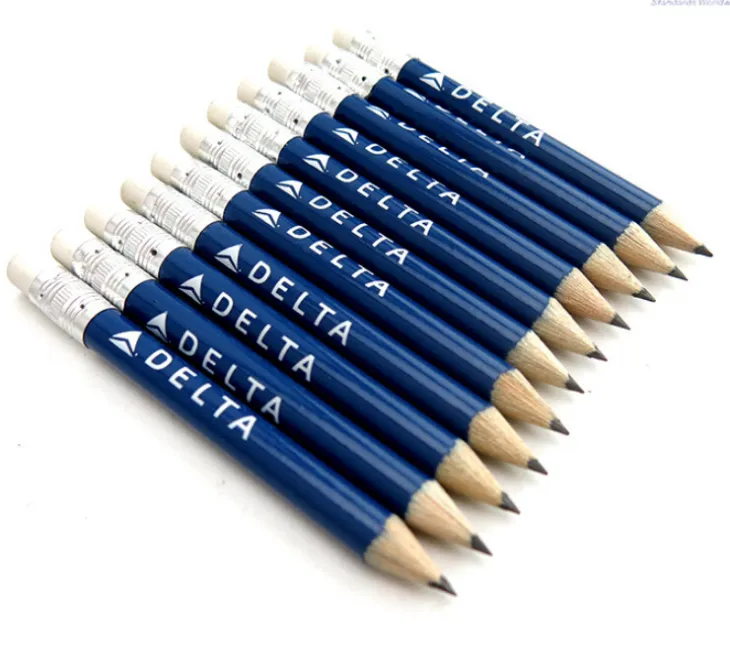
HB Pencils Are the Best
Many people consider HB pencils the best because they represent a good middle ground. They create a nice, firm mark that is easy to read, but they are not so soft that they will snap and smudge, nor so hard that they are brittle or difficult to make out on the paper.
As mentioned, "HB" is not a fixed standard that every manufacturer adheres to, but choosing an HB is often a good idea if you want the pencil to be multipurpose or you aren't sure what kind of pencil you need. This will provide you with a middle ground writing tool that should perform well in most conditions. You can then decide whether you need a darker or lighter pencil.
How HB Pencils Are Made: A Detailed Step by Step Process
From forest tree to ready-to-use wood
The journey of pencil manufacturing begins with sourcing pre-cut wood panels, a crucial step for enhancing production efficiency. Specialized facilities process basswood, poplar, or cedar logs into uniform panels, undergoing baking, softening, waxing, and staining to ensure quality, consistency, and a smooth surface for the next stages of pencil making.
Carving the wood panels
Next, each panel is precisely carved with an electric saw, forming thin channels tailored for the graphite lead. This critical phase shapes the panels, marking their first transition towards becoming pencils.
Making the graphite lead
In this step, the pencil's 'lead'—a misnomer for the graphite core—is created from a blend of graphite and clay, providing the necessary durability. This mixture is then solidified at 1500°f. The machinery then molds this composite into slender cores, ready for insertion into the carved wood panels.
Make sandwich slats
In this phase, wood panels are divided into two sets for specialized processing. One set forms the pencil's structural base, cradling the graphite lead, while the other caps it, completing the pencil's iconic shape. These halves journey through dedicated machinery, eventually reuniting to encapsulate the graphite core within a sturdy wooden embrace.
Adding the glue
Next, an elastic glue specifically designed for the pencil making process, rich in polyvinyl acetate, is applied to the grooves, securing the graphite in place. This adhesive is pivotal, ensuring a durable bond that seamlessly unites the pencil's components, giving the illusion of a single, solid piece.
Stacking the wood and lead
Here, the assembly takes form as the graphite snugly fits into one set of panels, with the other set aligning atop, creating a sandwich structure. This meticulous stacking crafts the pencil's foundational form, embedding the graphite securely between the wood layers.
Putting it all together
This critical phase in how lead pencils are made involves high-pressure machinery (exerting up to 1,000 kg) that firmly bonds the wood panels, ensuring the halves seamlessly come together. This precise pressure application is crucial, solidifying the bond as the glue undergoes its essential drying stage, a process that cements the pencil's structural integrity.
Slicing the wood into individual pencils
Now, the bonded wood panels journey to a precision cutting phase, where an industrial saw meticulously carves out individual pencils from the unified block. Subsequent sanding smoothens each piece, preparing these nascent pencils for their final journey toward becoming a writer's staple tool.
Quality control
Quality control is paramount in pencil manufacturing, ensuring each pencil meets stringent standards, ready for consumer use. Specialists rigorously test samples from each batch, examining lead strength, sharpening quality, and overall craftsmanship, guaranteeing only the finest products proceed to the next phase.
The finishing touches
This stage polishes the pencil's aesthetics and functionality. A protective coat of lacquer enhances the pencil's look and feel. The metal ferrule secures a rubber eraser to the pencil, completing its classic design.
Pencils are packaged and ready to ship
Concluding the production journey, pencils are meticulously packaged, marking their readiness for worldwide distribution.
Is HB a Standard Pencil?
The standard writing pencil is graded HB. This designation, in the form "H. B.", was in use at least as early as 1814. Softer or harder pencil grades were described by a sequence or successive BS or HS such as BB and BBB for successively softer leads, and HH and HHH for successively harder ones. HB is a standard hardness grade for pencils, but it is not a specific type of pencil. It indicates that the pencil lead is of medium hardness- not too hard and not too soft.
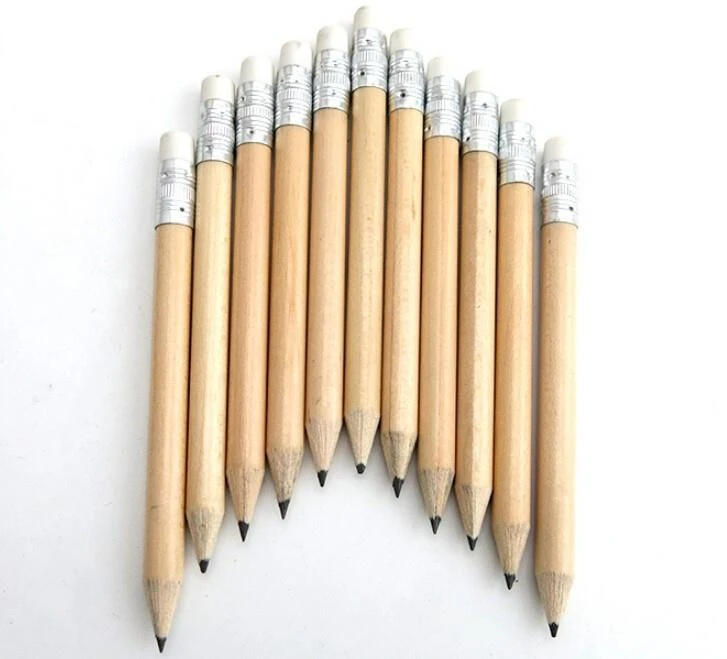
Which Pencil for Which Purpose?
Carpenter pencil
Field of use: Suitable for nearly all surfaces the ideal tool for marking, drawing or sketching – a true all-rounder for all sorts of projects.
Masonry pencil
Field of use: Suitable for hard and porouse surfaces perfect for writing or marking things on stone, plaster, concrete and many more. With special 6h lead.
Lead-/ copy pencil
Field of use: Suitable for wet surfaces wood, gypsum, cardboard or more – this pencil can still write on things that got moist/wet.
All-writing pencil
Field of use: Suitable for smooth surfaces write on foil, plastic, tiles and even glass. With our all-writing pencils you’re prepared for smooth surfaces.
Multigraph pencil
Field of use: Suitable for all smooth surfaces writing on smooth surfaces such as iron, metal or glass – no problem with the multigraph graphite lead.
How to Use Different Pencils?
You can use any pencils to draw, but below is a quick guide on how you might use different pencil grades. We also recommend experimenting and playing around with the different grades in your set to see what works for you!
1
9H-5H
Great for making sketches for watercolour paintings because they're light and don't show through the paint as obviously. Watersoluble graphites also work well for this purpose because they dissolve in water.
2
4H-2H
These create a very light mark and are ideal for technical drawing, outlines, light sketches and guide lines.
3
H, F, HB and B
A popular go-to for simple sketches and writing.HB is often used as a multi-purpose pencil because it's clear enough to write and draw but has minimal smudging.
4
B grades
The softer texture and darker marks make these pencils ideal for shading and tonal modelling. The higher B pencils are also great for blending and smudging.
5
EE
As we mentioned earlier, EE pencils create a very dark mark with a more matte finish than graphite pencils because they're a mix of graphite and charcoal. This makes them ideal for very dark shading and tonal modelling.
FAQ
We're professional HB pencil manufacturers and suppliers in China, supplying the best customized service. Feel free to wholesale high quality HB pencil from our factory.
storage boxes for stationery, business cards, sticky notes